Imhotep
c. 27th century BCE · Ancient Egypt
designer of Egypt's Step Pyramid
Imhotep served Pharaoh Djoser as chief architect during Ancient Egypt's Third Dynasty. He designed the Step Pyramid at Saqqara, considered Egypt's earliest large-scale stone pyramid. The pyramid complex included underground chambers and a stepped structure rising around 62 meters. His architectural innovations influenced later pyramid construction in ancient Egypt.
Key works: Step Pyramid of Djoser, Saqqara complex, Djoser's mortuary complex
Vitruvius
c. 80–15 BCE · Ancient Rome
author of De architectura
Vitruvius served as a Roman architect and engineer and wrote De architectura, the only surviving major treatise on architecture from classical antiquity. The work covers various topics including temple design, urban planning, machinery, and water supply. Vitruvius emphasized durability, utility, and beauty as essential architectural principles. His writings influenced Renaissance architects.
Key works: De architectura
Apollodorus of Damascus
active early 2nd century CE · Roman Empire
architect of Trajan's Bridge and Forum
Apollodorus served as chief architect under Emperor Trajan. He designed Trajan's Bridge over the Danube River, notable for its large scale and construction techniques. He also designed Trajan's Forum in Rome, which included markets, libraries, and the Column of Trajan. His architectural and engineering work represents significant Roman advancements.
Key works: Trajan's Bridge, Trajan's Forum, Port of Trajan
Isidore of Miletus
active c. 6th century CE · Byzantine Empire
co-architect of Hagia Sophia
Isidore of Miletus worked with Anthemius of Tralles to design and build the Hagia Sophia in Constantinople under Emperor Justinian I. The structure features a large dome resting on pendentives, an architectural innovation of the time. Completed in the 530s CE, Hagia Sophia's design influenced Byzantine and later architectural styles.
Key works: Hagia Sophia, Church of Saints Sergius and Bacchus
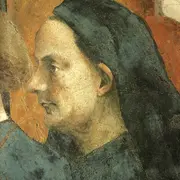
Filippo Brunelleschi
c. 1377–1446 · Florence, Italy
engineered Florence Cathedral dome
Brunelleschi won the competition to design the dome of Florence Cathedral. He developed a herringbone brick pattern and a double-shell design that contributed to the stability of the dome. Brunelleschi is credited with developing linear perspective, which influenced painting and architectural drawing. The Florence Cathedral dome became a significant architectural achievement of the Renaissance.
Key works: Florence Cathedral dome, Ospedale degli Innocenti, Linear perspective

Michelangelo Buonarroti
1475–1564 · Rome, Italy
designed St. Peter's Basilica dome
Michelangelo was appointed to complete the dome of St. Peter's Basilica. His design included a double-shell structure. Michelangelo modified earlier designs to create the dome's final form. The dome is a prominent feature of Rome's skyline and influenced later church architecture. Michelangelo was also a sculptor and painter.
Key works: St. Peter's Basilica, Piazza del Campidoglio, Palazzo Farnese
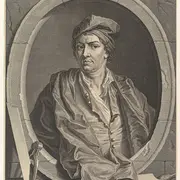
Andrea Palladio
1508–1580 · Veneto, Italy
Villa Rotonda principles
Palladio designed Villa Rotonda near Vicenza with a symmetrical, square plan and a central circular dome, inspired by classical temple architecture. Each facade has a portico oriented toward the cardinal directions. His use of proportions and classical forms influenced Western architecture. His villas in the Veneto region are notable examples of Renaissance architecture. The term 'Palladian' architecture derives from his work.
Key works: Villa Rotonda, Palladian villas, Teatro Olimpico
Christopher Wren
1632–1723 · London, England
rebuilt St. Paul's Cathedral
After the Great Fire of London in 1666, Wren designed many churches in the city including St. Paul's Cathedral. The dome reflects influences from earlier Renaissance domes and adapts to English materials and construction techniques. The cathedral's Whispering Gallery is notable for its acoustics. Wren's work combined Baroque style with mathematical precision. He was also involved in astronomy and scientific research.
Key works: St. Paul's Cathedral, Royal Observatory, Multiple London churches
Gian Lorenzo Bernini
1598–1680 · Rome, Italy
Piazza San Pietro colonnades
Bernini designed the colonnades of Piazza San Pietro at the Vatican, consisting of Doric columns arranged in rows that define the space. He created the Fontana della Barcaccia fountain in Rome. Bernini sculpted The Ecstasy of Saint Teresa in the Cornaro Chapel. He contributed to urban planning in Baroque Rome and was a prominent artist and architect in 17th-century Rome.
Key works: Piazza San Pietro, St. Teresa in Ecstasy, Bronze David
John Smeaton
1724–1792 · England
Eddystone Lighthouse designer
Smeaton designed the third Eddystone Lighthouse, built on rocks off the coast of Cornwall. He pioneered the use of hydraulic lime mortar for underwater construction. The lighthouse stood for decades before being replaced. Smeaton made contributions to water wheel design, canal engineering, and mining pumps. He was a founding member of the Society of Civil Engineers. His work laid foundations for modern civil engineering.
Key works: Eddystone Lighthouse, Coalbrookdale Bridge, Windmill design improvements
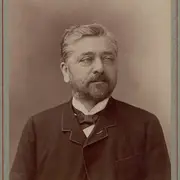
Gustave Eiffel
1832–1923 · France
Eiffel Tower engineer
Eiffel engineered the Eiffel Tower, completed in 1889 for the Universal Exhibition in Paris. The wrought-iron structure was the tallest man-made structure at the time. Eiffel's firm also built the internal iron framework of the Statue of Liberty. The tower remains a landmark in Paris and an important example of iron architecture. Eiffel conducted meteorological studies and aerodynamic experiments during his career.
Key works: Eiffel Tower, Statue of Liberty structure, Metal structural systems
Washington Roebling
1837–1926 · USA
Brooklyn Bridge completion
Washington Roebling assumed leadership of the Brooklyn Bridge construction after the illness of his father, John A. Roebling. Due to decompression sickness, he directed the project largely from his home, communicating with on-site workers. The bridge, opened in 1883, connects Manhattan and Brooklyn with a suspension design featuring stone towers and steel cables. It was among the longest suspension bridge spans at the time and remains in use.
Key works: Brooklyn Bridge, Cincinnati Bridge, Niagara Gorge bridge
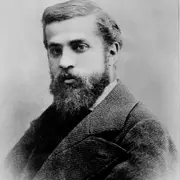
Antoni Gaudí
1852–1926 · Barcelona, Spain
Sagrada Família architecture
Gaudí spent a large part of his career working on the Sagrada Família in Barcelona. His architectural style incorporated natural forms and innovative structural techniques, including hyperbolic paraboloids and catenary arches. The facades of the Sagrada Família depict themes such as the Nativity and the Passion. He used trencadís mosaics, composed of broken tile fragments. Gaudí's models involving weighted chains helped analyze structural forces. He died in 1926 after being struck by a tram. The Sagrada Família remains unfinished and combines Gothic and modernist elements.
Key works: Sagrada Família, Park Güell, Casa Batlló
Isambard Kingdom Brunel
1806–1859 · England
Clifton Suspension Bridge
Brunel was a prominent engineer responsible for several important projects, including the ships Great Western, Great Britain, and Great Eastern. The Clifton Suspension Bridge spans the Avon Gorge and was based on a design competition. Brunel's SS Great Western was an early steamship built for transatlantic service. SS Great Britain was notable for its iron hull and screw propeller. The Great Eastern was involved in laying transatlantic telegraph cables. Brunel faced technical and financial challenges during his career and died at 53, leaving some projects incomplete.
Key works: Clifton Suspension Bridge, SS Great Eastern, Great Western Railway
Le Corbusier
1887–1965 · France
modern architecture pioneer
Le Corbusier promoted modern architecture principles including pilotis, free facade, open floor plan, horizontal windows, and roof gardens. Villa Savoye illustrates these ideas. He proposed urban planning concepts such as the Radiant City. He co-founded CIAM, influencing 20th-century architectural discourse. Chandigarh was designed with his contribution, exemplifying his vision on a city scale. Notre-Dame du Haut in Ronchamp is an example of his later sculptural concrete work. His writings influenced many architects and his legacy is significant in modern architecture.
Key works: Villa Savoye, Chandigarh city, Notre-Dame du Haut
Frank Lloyd Wright
1867–1959 · USA
Fallingwater design
Wright developed the philosophy of organic architecture, aiming to integrate buildings with their natural surroundings. Fallingwater features cantilevered terraces over a waterfall in Pennsylvania. He designed many Prairie School houses characterized by low-pitched roofs and open interiors. Taliesin was his home, studio, and school. The Guggenheim Museum in New York City is known for its spiraling interior. Wright designed over 1,000 structures, about half completed. His Usonian houses were designed as affordable homes for the middle class. He died in 1959 after a long career influencing American architecture.
Key works: Fallingwater, Guggenheim Museum, Taliesin
 BLUEPRINT HISTORY